🧬 Book DNA
- 🧠 Mood: Inspiring • Provocative • Informative • Practical
- 🚀 Pacing: Fast-paced / Page-turner
- 🧩 Complexity: Moderate
- 🎯 Perfect For: Deep Thinking • Gift • Career Growth • Learning a Skill
📑 Table of Contents
- Introduction: Beyond the Luck of Advertising.
- The Secret Science of Social Transmission
- The STEPPS Framework: Six Principles of Contagiousness
- 1. Social Currency (People share things that make them look good)
- 2. Triggers (Top of mind, tip of tongue)
- 3. Emotion (When we care, we share)
- 4. Public (Built to show, built to grow)
- 5. Practical Value (News you can use)
- 6. Stories (Information travels under the guise of idle chatter)
- About the Author: Jonah Berger
- Case Studies in Contagiousness
- Critical Reception and Industry Praise
- Conclusion: Designing for Virality
- Comparison: Berger vs. The Classics

Introduction: Beyond the Luck of Advertising.
Why do certain products, ideas, or behaviors go viral while others fail? This Contagious by Jonah Berger review explores whether it is just a matter of luck or a hidden science. In the New York Times bestseller Contagious by Jonah Berger Review, Wharton marketing professor Jonah Berger argues that virality isn’t about cat videos or expensive advertising.
Berger has spent a decade answering these questions by studying how social influence shapes everything from the names we give our children to the cars we buy. Any comprehensive Contagious by Jonah Berger review must highlight his finding that word-of-mouth is ten times as effective as traditional advertising because it is more trusted and targeted.
The Secret Science of Social Transmission
What makes online content go viral? If you said advertising, think again. People don’t listen to advertisements; they listen to their peers. This Contagious by Jonah Berger review reveals that virality is driven by six basic principles, organized into a framework known as the STEPPS model.
This Contagious by Jonah Berger review looks at a model that provides actionable techniques for designing messages that people will share, whether you are a manager at a big company or a small business owner. Berger’s work represents a provocative shift from the technology of transmission to the fundamental psychology of why we talk and share.
The STEPPS Framework: Six Principles of Contagiousness
1. Social Currency (People share things that make them look good)
Human beings are hardwired to care about how others perceive them. We share things that make us look smart, “in the know,” or cool. Berger calls this Social Currency.
- Inner Remarkability: To get people talking, a product must be remarkable—literally worthy of a remark. It must break patterns or exceed expectations.
- Leveraging Game Mechanics: Points, badges, and leaderboards encourage people to share their achievements, which in turn promotes the brand through social competition.
- Making People Feel Like Insiders: Scarcity and exclusivity make people feel special. When something is “members only,” those who have access will talk about it to signal their status to others.
2. Triggers (Top of mind, tip of tongue)
If Social Currency gets people talking once, Triggers keep them talking. A trigger is a stimulus in the environment that connects back to an idea or product. This Contagious by Jonah Berger review notes that a good trigger should be frequent and associated with daily habits.
- Environmental Cues: Berger cites the “Mars Bar” example: sales increased when NASA’s Pathfinder mission landed on Mars because the planet’s name acted as a constant trigger for the candy bar.
- Frequency of Trigger: A good trigger should happen often. Associate your product with a daily habit to ensure it remains at the forefront of the consumer’s mind.
- The Power of Context: Brands succeed when they associate themselves with a specific time, place, or situation that occurs frequently in the consumer’s life.
3. Emotion (When we care, we share)
Virality is driven by physiological arousal rather than just “positive” feelings. This Contagious by Jonah Berger review highlights that high-arousal emotions like awe and excitement compel us to share.
- High-Arousal Emotions: Emotions like anger, anxiety, awe, and excitement fire up our nervous system and compel us to take action, such as sharing a video or article.
- Low-Arousal Emotions: Emotions like sadness or contentment actually decrease the likelihood of sharing because they make us “shut down” or relax.
- Focus on the “Why”: Marketers shouldn’t just list features; they should find the “awe” or the “outrage” that makes people want to tell their friends.
4. Public (Built to show, built to grow)
If something is easy to see, it’s easy to imitate. Turning a private choice into a public signal is a key takeaway in our Contagious by Jonah Berger review.
- Making the Private Public: Products like the “Apple” logo on the back of laptops or “Movember” mustaches turn a private choice into a public signal.
- Behavioral Residue: This is the physical evidence left behind after a behavior occurs, such as “I Voted” stickers, which provide a lasting signal to others.
- Self-Advertising: When a product advertises itself during use (e.g., “Sent from my iPhone”), it creates a continuous loop of public visibility.
5. Practical Value (News you can use)
People like to help others. If a piece of information is useful, saves money, or improves health, it becomes highly shareable.
- The Rule of 100: For items under $100, a percentage discount (20% off) looks better. For items over $100, a numerical discount ($20 off) is more effective.
- Packaging Knowledge: Information must be bite-sized and easy to pass along so that it remains practical in a fast-paced social environment.
- Altruism as a Driver: Sharing practical value is an act of kindness that also provides a bit of social currency to the sharer.
6. Stories (Information travels under the guise of idle chatter)
People don’t just share information; they tell stories. A story is like a Trojan Horse—a vessel that carries a message inside it.
- Narrative over Data: We are more likely to remember a story about a man losing 200 pounds eating Subway sandwiches than a list of nutritional facts.
- The Integral Message: The brand or message must be integral to the plot. If the brand can be removed from the story without ruining it, the marketing effort fails.
- Creating a Vessel: Embed your idea so deeply in the story that people cannot tell the story without mentioning your product.
About the Author: Jonah Berger
Jonah Berger is a marketing professor at the Wharton School at the University of Pennsylvania. He is an internationally bestselling author of Contagious, Invisible Influence, and The Catalyst. As a world-renowned expert on social influence and word-of-mouth, he has published over 50 papers in top-tier academic journals.
Berger has performed groundbreaking experiments that have changed the way experts think about information transmission. He has consulted for a range of Fortune 500 companies and his work has been featured in the New York Times Magazine’s “Year in Ideas”.
Case Studies in Contagiousness
Berger illustrates his principles with arresting and often counterintuitive examples that prove his framework’s efficacy:
- The Luxury Steakhouse: Discover how a high-end restaurant found immense popularity through the strategic use of a lowly cheesesteak to create remarkability.
- The Boring Blender: Learn why more than 200 million consumers shared a video about a blender—one of the most mundane products imaginable—by showcasing inner remarkability through the “Will It Blend?” campaign.
- Anti-Drug Campaigns: Berger explains why some anti-drug commercials might have actually increased drug use by accidentally providing social proof (Public) of drug prevalence, showing the dangers of misapplied psychological principles.
Critical Reception and Industry Praise
The impact of Contagious is reflected in the high praise from top psychologists, authors, and marketing experts:
- Dan Ariely (Author of Predictably Irrational): “It is hard to come up with a better example of using social science to illuminate the ordinary and extraordinary in our daily lives.”
- Daniel Gilbert (Author of Stumbling on Happiness): “Jonah Berger knows more about what makes information ‘go viral’ than anyone in the world.”
- Chip Heath (Co-author of Made to Stick): “If you are seeking a bigger impact, especially with a smaller budget, you need this book. Contagious will show you how to make your product spread like crazy.”
- Charles Duhigg (Author of The Power of Habit): “Jonah Berger knows the answers, and, with Contagious, now we do, too.”
- Tasha Eichenseher: “Think of it as the practical companion to Malcolm Gladwell’s The Tipping Point.”
- Publishers Weekly: “An exegesis on how ideas really ‘go viral’… Berger writes in a sprightly, charming style that deftly delineates the intersection of cognitive psychology and social behavior.”
Conclusion: Designing for Virality
Jonah Berger’s Contagious is a masterclass in modern marketing that shifts the focus from the technology of transmission to the human element. It proves that virality isn’t a “lightning in a bottle” phenomenon; it can be engineered by applying the STEPPS framework.
By providing specific, actionable techniques for helping information spread, Berger has created a success-oriented playbook for marketers and non-experts alike. It teaches us that to catch on, an idea must be visible, emotional, triggered by the world around us, and wrapped in a compelling story. For anyone looking to fill their website or Bookshop entry with content that moves the needle, Contagious is the essential blueprint.
Comparison: Berger vs. The Classics
In this Contagious by Jonah Berger Review, we compare his work to other library staples:
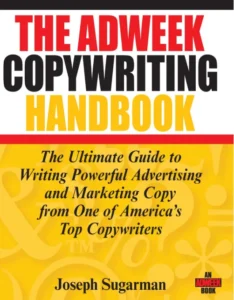
- Vs. The Adweek Copywriting Handbook: Sugarman uses psychological triggers for ads, but Berger explains the science of word-of-mouth transmission.
- Vs. Influence: Cialdini focuses on persuasion, while Berger focuses on the mechanism of “catching on”.
- Vs. Everybody Writes: Handley shows you how to write; Berger shows you how to make those words spread.