🧬 Book DNA
- 🧠 Mood: Hopeful • Inspiring • Provocative • Informative • Practical
- 🚀 Pacing: Medium
- 🧩 Complexity: Moderate
- 🎯 Perfect For: Deep Thinking • Gift • Self-Improvement • Career Growth
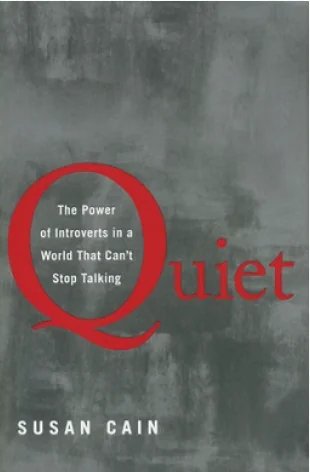
Table of Contents
- 🧬 Book DNA
- 1. Introduction: The Global Revolution of Silence
- 2. The Great Shift: Decoding the Extrovert Ideal
- 3. The Biological Edge: High-Reactive Brains
- 4. Quiet Leadership: Success Beyond Charisma
- 5. Innovation in Solitude: The Wozniak Factor
- 6. Comparing Paradigms: Cain vs. Dalio and Clear
- 7. Practical Wisdom for Parents and Teachers
- Final Verdict: A Modern Masterpiece
1. Introduction: The Global Revolution of Silence
A comprehensive Quiet by Susan Cain Review must begin by acknowledging that this is more than just a book; it is a cultural manifesto. Susan Cain, recognized by Inc. Magazine as one of the world’s top 50 leadership experts, has spent years researching why we undervalue silence. Her legendary TED Talk has garnered over 40 million views, proving that the struggle of introverts in an extroverted world is a universal concern.
This book doesn’t just offer advice—it offers a new lens through which to view human potential. Whether you are an introvert looking for validation or an extrovert trying to understand your partner or colleagues, this review explores the profound impact of Cain’s work on modern psychology and leadership.
2. The Great Shift: Decoding the Extrovert Ideal
Throughout the twentieth century, Western society underwent a massive transformation. In this Quiet by Susan Cain Review, we examine Cain’s findings on the rise of the “Extrovert Ideal.” We transitioned from a “Culture of Character,” where modesty and inner virtue were prized, to a “Culture of Personality,” where charisma and self-promotion became the primary markers of success.
This shift deeply permeated our schools, workplaces, and religious institutions. Cain argues that by favoring those who speak loudest, we systematically overlook those who think deepest. We lose out on immense talent when charisma is mistaken for competence.
3. The Biological Edge: High-Reactive Brains
One of the most fascinating scientific aspects of this Quiet by Susan Cain Review is the exploration of biological temperament. Drawing on neuroscientific research, Cain explains that introverts often possess “high-reactive” nervous systems.
- Sensitivity to Stimuli: Introverts react more intensely to noise, social cues, and new environments.
- Deep Processing: This sensitivity allows for deeper information processing and more careful decision-making.
- Validation: For many, this biological explanation acts as a “boon,” removing the stigma of being “anti-social” or “shy”.
4. Quiet Leadership: Success Beyond Charisma
Fortune magazine highlights that Quiet should be required reading for anyone in management. Contrary to popular belief, introverts often make better leaders, especially when managing proactive employees.
- Listening Over Talking: Introverted leaders are more likely to listen to and implement suggestions from their team.
- The Power of Questions: Successful introverts often tap into the “power of questions” to lead rather than dominating the conversation.
- Case Studies: Cain provides portraits of record-breaking salesmen and high-octane speakers who recharge in solitude.
5. Innovation in Solitude: The Wozniak Factor
This Quiet by Susan Cain Review emphasizes that many of history’s greatest contributions—from Chopin’s nocturnes to Steve Wozniak’s first Apple computer—were created in solitude.
- The Myth of Brainstorming: Cain challenges the idea that group brainstorming is the best way to innovate.
- Individual Focus: Deep work often requires the kind of “restorative niche” that only solitude can provide.
- Social Productivity: Solitude is not just about being alone; it is about being socially productive in a way that teams often inhibit.
6. Comparing Paradigms: Cain vs. Dalio and Clear
For the readers of Review Space, it is essential to see how Cain’s philosophy fits into our broader framework of self-improvement and business:
- Vs. Principles by Ray Dalio Review: While Ray Dalio focuses on building efficient “machines” and “radical transparency,” Cain reminds us that the most important parts of those machines—the creative thinkers—often need quiet to function.
- Vs. Atomic Habits by James Clear Review: James Clear teaches us the “1% rule” for building systems. Cain’s work shows that introverts are naturally suited for the kind of consistent, quiet discipline required to maintain these atomic habits over the long term.
- Vs. The Psychology of Money Review: Morgan Housel discusses how ego ruins financial plans; Cain’s research suggests that introverts’ lower need for social status signaling makes them more resilient against the “Goalpost Shift”.
7. Practical Wisdom for Parents and Teachers
A significant portion of the Quiet by Susan Cain Review is dedicated to the next generation. Cain offers a wealth of advice for those raising or teaching quiet children. Instead of telling them to “speak up,” we should be emboldening them to use their natural gifts of observation and empathy.
By designing environments that respect the need for quiet reflection, we allow introverted children to thrive rather than forcing them to act “out of character” at the cost of their emotional health.
Final Verdict: A Modern Masterpiece
In summary, this Quiet by Susan Cain Review finds that “gentle is powerful.” Cain’s impeccably researched page-turner will make you see yourself and the world in a whole new light. It is a definitive guide for anyone who wants to understand the gifts of the introverted half of the population.